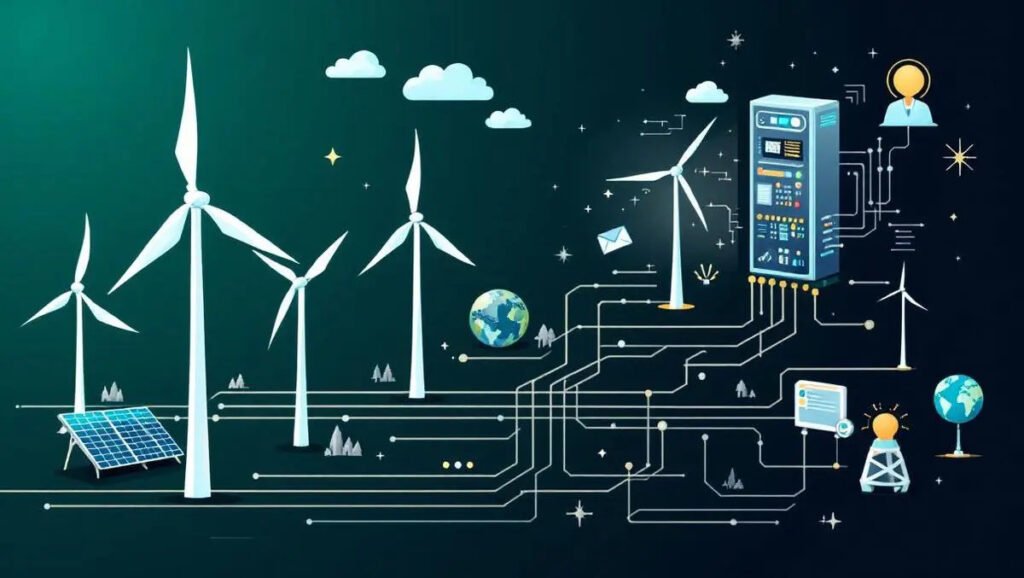
Technology is transforming energy systems through enhanced operational efficiency and real-time monitoring. The integration of IoT devices enables continuous data collection, while AI algorithms streamline resource management and predict maintenance needs. Big data analytics plays a critical role by identifying usage patterns and trends, informing strategic decisions. As these technologies converge, they not only support sustainability but also raise questions about their impact on future energy infrastructures and stakeholder engagement.
The Role of IoT in Energy Management
The integration of the Internet of Things (IoT) into energy management systems represents a transformative shift towards enhanced efficiency and sustainability.
Through the deployment of smart meters, real-time energy monitoring becomes possible, empowering users to optimize consumption patterns.
This interconnected framework facilitates data-driven decision-making, enabling individuals and organizations to reduce waste, lower costs, and contribute to a more sustainable energy landscape, ultimately fostering a sense of freedom.
Artificial Intelligence: Enhancing Efficiency and Predictability
Artificial intelligence (AI) significantly enhances the efficiency and predictability of energy systems by leveraging advanced algorithms and machine learning techniques.
Through predictive maintenance, AI anticipates equipment failures, reducing downtime and maintenance costs.
Additionally, AI-driven energy optimization enables real-time adjustments, maximizing resource utilization.
This innovative approach empowers energy systems to operate autonomously, fostering a more resilient and responsive infrastructure that aligns with the desire for freedom in energy management.
Big Data Analytics for Informed Decision-Making
As energy systems become increasingly complex, the integration of big data analytics emerges as a pivotal tool for informed decision-making.
Utilizing data visualization techniques, stakeholders can interpret vast datasets effectively, revealing patterns and trends essential for strategic planning.
Predictive analytics further enhances this capability, allowing for anticipatory actions that optimize resource allocation and operational efficiency, ultimately fostering a more resilient and responsive energy landscape.
Integrating Renewable Energy Sources With Smart Technologies
Integrating renewable energy sources with smart technologies represents a transformative approach to modern energy systems, enhancing efficiency and sustainability.
Solar integration, coupled with advanced energy storage solutions, enables real-time management of energy supply and demand.
This synergy not only optimizes resource utilization but also empowers consumers to harness clean energy, fostering energy independence and resilience in a rapidly evolving energy landscape.
Conclusion
In conclusion, the convergence of IoT, AI, and big data analytics fundamentally transforms smart energy systems, enabling enhanced operational efficiency and predictive capabilities. This technological integration not only streamlines energy management but also facilitates the seamless incorporation of renewable energy sources. By harnessing these advanced tools, stakeholders can visualize and analyze energy trends, fostering a sustainable infrastructure that is both resilient and adaptive to changing demands. Thus, the synergy of these technologies is vital for future energy solutions.