Emotional Support Animals (ESAs) are becoming more recognized as a form of comfort for people with anxiety, depression, PTSD, and other mental health challenges. While dogs often come to mind, emotional support cats are just as valuable – sometimes even more so for people who live in smaller spaces or prefer calmer companions.
But what makes cats suitable as ESAs? Are there drawbacks you should know about? And how do you even qualify for one legally? Let’s break it down clearly so you can decide if an emotional support cat is the right choice for you.
Pros & Cons by Species
Not every Emotional Support Animal (ESA) looks or behaves the same. Some people feel comfort with cats, while others prefer dogs, rabbits, birds, or even mini pigs. Each species has its own set of strengths and challenges. The right choice depends on your lifestyle, housing situation, and personal needs.
Emotional Support Cats
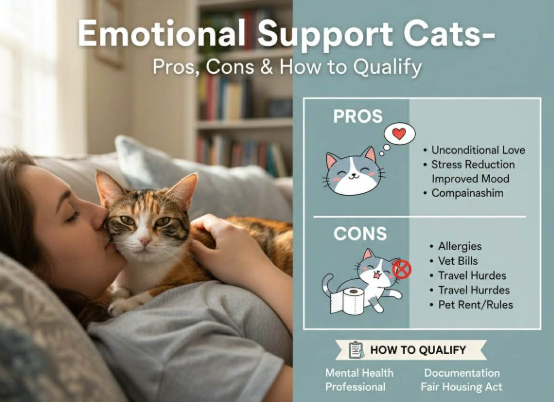
Pros
- Naturally independent, so they don’t require constant supervision or long walks.
- Their purring and soft fur are proven to reduce stress and calm anxiety.
- Easy to manage in apartments and smaller living spaces.
- Most cats are already litter-trained, which makes them fairly low-maintenance compared to other animals.
- They can bond deeply with their owners, offering quiet but consistent comfort.
Cons
- Many cats dislike travel or changes in routine, which can make outings stressful.
- Territorial behavior may cause problems if you already have other pets at home.
- Scratching, climbing, and shedding can be an issue for some owners, especially if allergies are involved.
- Some cats are less social and may take longer to warm up to people.
Small Dog ESA
Small Dog ESA
Pros
- Loyal and often protective.
- Easier to travel with than larger dogs.
- More trainable compared to cats.
Cons
- Require daily walks and outdoor time.
- Can bark excessively in apartments.
Some landlords are strict about dog breeds and sizes
Hypoallergenic ESA Options
For people who love animals but struggle with allergies, finding the right Emotional Support Animal can be tricky. Cats and dogs are wonderful companions, but they often carry dander that triggers sneezing, watery eyes, or breathing issues. Thankfully, there are hypoallergenic ESA options that may be a safer choice.
Examples include:
- Certain dog breeds, like Poodles or Maltese.
- Specific cat breeds such as Siberians or Balinese.
These pets shed less dander, making life easier for sensitive owners.
Bird / Rabbit / Mini Pig ESA
Birds
- Pros: Bright, social, and playful. Some species even mimic speech, creating interactive comfort.
- Cons: Can be loud, messy, and require daily cleaning.
Rabbits
- Pros: Gentle, quiet, and bond well with owners. Great for small apartments.
- Cons: Chewing habits can damage furniture, and they need space to hop around.
Mini Pigs
- Pros: Surprisingly affectionate, intelligent, and can be trained.
- Cons: Need more space than most people think, and not all housing allows them.
Temperament & Training Basics
Cats are often misunderstood when it comes to emotional support. Unlike service animals, they don’t need to perform special tasks to help their owners. Instead, their value lies in the comfort and stability they bring. Still, a calm and stable temperament is essential for a cat to thrive as an ESA. Not every cat enjoys cuddles or busy environments, so choosing the right breed or personality makes a big difference.
Breed/Species Mini Profiles
- Ragdoll Cats: Known as the “puppy-like” cats, Ragdolls are calm, affectionate, and love being held. They often go limp in their owner’s arms, making them perfect cuddle companions.
- Siamese Cats: Social and vocal, Siamese cats form strong bonds with their humans. Their chatty nature can be uplifting for people who feel lonely or isolated.
- Maine Coons: Gentle giants of the cat world, Maine Coons are big, friendly, and playful. They do well in families and often enjoy being part of daily activities.
- Persians: Quiet, sweet, and relaxed, Persians are perfect for people who prefer a peaceful, low-energy pet that’s happy to lounge and keep them company.
These breeds tend to adapt well as emotional support cats because of their affectionate and consistent personalities. Of course, any cat with the right temperament can provide comfort, regardless of breed.
See also: numeric reference blueprint verification
Starter Training Tips
Even though ESAs don’t require specialized training, some basic behavior shaping can make life smoother for both the cat and owner. For emotional support cats:
- Use treats to encourage calm sitting and lap time. This helps build trust and reinforces soothing behaviors.
- Introduce them early to carriers for stress-free vet visits or travel. Cats who grow comfortable with carriers are easier to manage in housing checks or emergencies.
- Provide scratching posts to prevent furniture damage. Redirecting their natural habits keeps your home safe while avoiding tension with landlords.
- Create safe spaces at home. Cats love cozy corners, and having one helps them feel secure during stressful times.
A little patience with training goes a long way. The goal isn’t to make cats perform tasks but to ensure they remain calm, loving, and supportive when you need them most.
Housing Considerations
One of the biggest reasons people apply for an ESA letter is housing rights. Under U.S. law, landlords must make reasonable accommodations for emotional support animals—even in “no pet” apartments.
This includes cats, small dogs, and in some cases, rabbits or birds. Mini pigs, however, may be trickier since not all buildings recognize them as household pets.
Important points for housing with emotional support cats:
- Landlords cannot charge pet deposits or monthly pet rent for ESAs.
- They may require official ESA documentation from a licensed professional.
- You must still ensure your cat is well-behaved and does not cause property damage.
Allergy & Shedding Notes
This is where choosing the right ESA really matters. Cats bring comfort, but they also bring fur. Some people experience mild to severe allergic reactions to cat dander.
Tips if you have mild allergies but still want a cat ESA:
- Consider hypoallergenic breeds like Siberian or Balinese cats.
- Invest in HEPA air purifiers to reduce allergens.
- Brush your cat regularly to minimize loose fur.
For those with stronger allergies, looking into a small dog ESA or even a hypoallergenic rabbit may be a better option.
Legal Boundaries
While emotional support cats bring real comfort, they don’t have the same access rights as service dogs. This is one of the most misunderstood areas for ESA owners.
What you should know:
- Public Access: Unlike service dogs, ESAs (including cats) are not guaranteed entry into restaurants, shops, or airplanes.
- Housing: The strongest legal protection comes from the Fair Housing Act (FHA), which prevents discrimination in housing.
- Travel: Airlines used to allow ESAs on flights for free, but most have changed their rules. Now, cats usually must travel in carriers as pets.
It’s important not to confuse ESA laws with service animal laws. Service dogs are highly trained to perform tasks for individuals with disability. Emotional support cats do not need training, but they only carry legal protections in specific contexts.
To avoid misunderstandings, always carry proper documentation. You can learn how to get yours through How to Get ESA Letter.
Conclusion
Cats can be the perfect emotional support animals for the right person. They’re low-maintenance, affectionate, and naturally calming. Still, they’re not ideal for everyone—some people struggle with allergies, while others need a more interactive or trainable animal.
The key is knowing your needs and lifestyle. If you want independence and quiet comfort, emotional support cats may be the best fit. If you prefer constant companionship and outdoor walks, a small dog ESA might work better.
No matter what species you choose, remember that ESAs require commitment. They’re not just legal tools for housing rights—they’re living companions that bring joy, stability, and comfort.
FAQs
1. How do I qualify for an emotional support cat?
You need an ESA letter from a licensed mental health professional. This document confirms that your cat provides emotional support to ease symptoms of a mental health condition.
2. Can my landlord refuse my emotional support cat?
In most cases, no. Under the Fair Housing Act, landlords must provide reasonable accommodation. The only exceptions are if the animal poses a health or safety threat or causes property damage.
3. What’s the difference between an ESA and a service animal?
A service animal (usually a dog) is trained to perform specific tasks for someone with a disability. An emotional support cat provides comfort but is not task-trained.
4. Are there specific cat breeds that work better as ESAs?
Yes. Ragdolls, Persians, Siamese, and Maine Coons are popular choices because of their gentle and affectionate temperaments. Still, any cat can become an ESA if they bond with you and provide comfort.
5. Do ESAs require training?
No specialized training is required. However, basic training—like being calm in carriers or using litter boxes consistently—helps make the experience smoother.